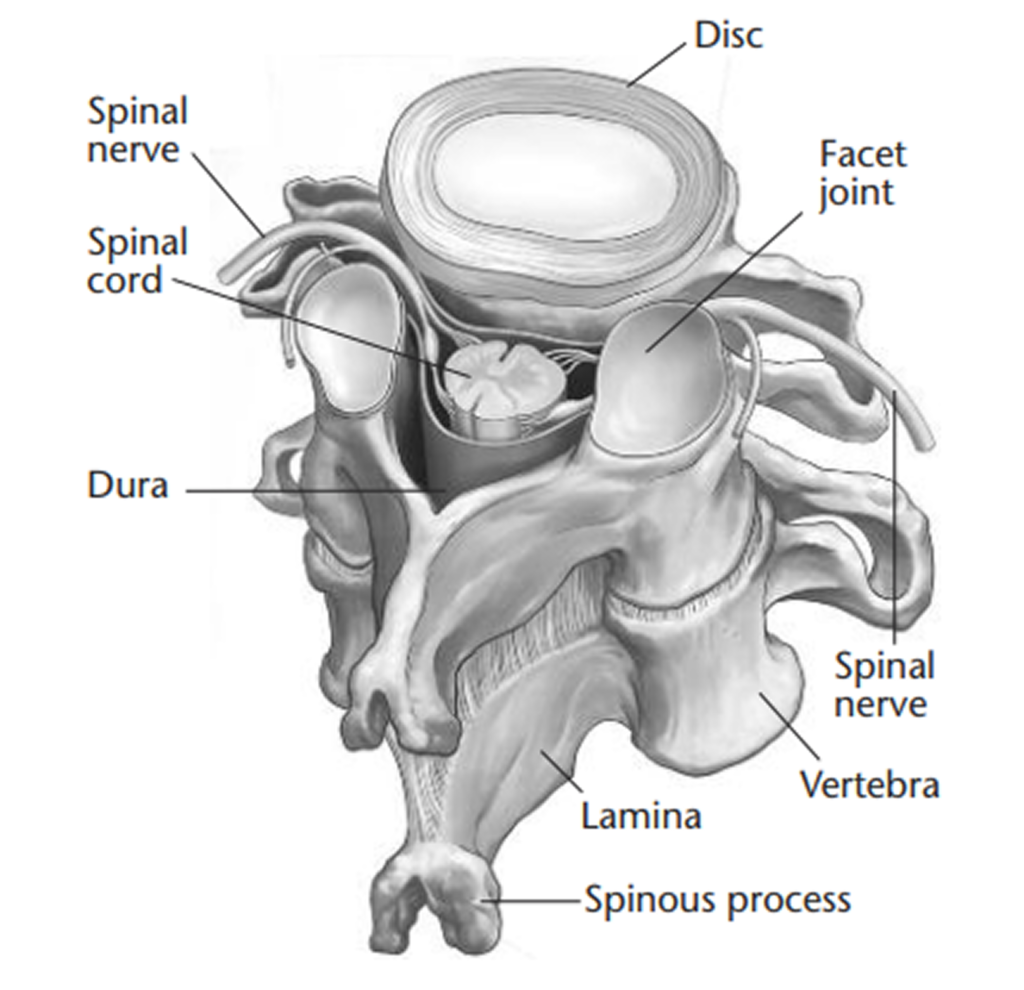
What is a Cervical Laminectomy?
Cervical laminectomy is one of the surgical procedures to treat symptoms of nerve root or spinal cord compression. Symptoms include pain, numbness, tingling, and weakness and clumsiness of the upper extremities. Pressure on the spinal cord can cause symptoms such as changes in sensation of the torso, difficulty with walking, and bowel/bladder dysfunction. Surgery can remove the pressure on nerves and spinal cord by opening the spinal canal and widening it. The surgeon creates more space around the spinal cord and the nerve roots. This may reduce inflammation and irritation. Cervical laminectomies can treat spinal canal stenosis, a narrowing of the spinal canal.
Spinal stenosis occurs mainly in older patients due to age-related changes such as:
Diagnosis
Diagnostic Imaging
Diagnostic imaging can provide pictures of vertebrae, other spinal structures and abnormalities. Magnetic resonance imaging (MRI), computer tomography (CT), and X-ray examination may reveal the precise location of abnormalities. One or more of these tests may be necessary. Your surgeon will examine you to determine strength, reflexes, ability to feel pain, ability to move, and any bowel or urinary problems.
Treatment Options