What is a Cervical Discectomy?
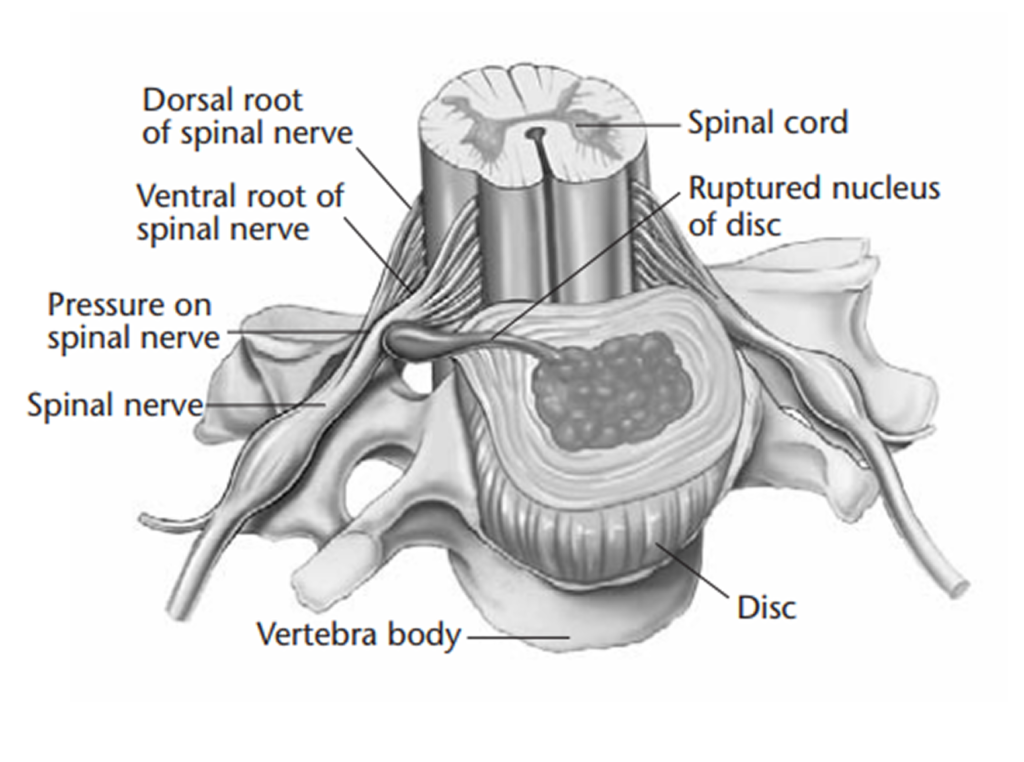
Cervical discectomy is a surgical procedure to treat symptoms due to a damaged disc that may be pressing on spinal nerve roots or the spinal cord in the neck. Symptoms may include pain, numbness, tingling, weakness and clumsiness of the upper limbs. Pressure on the spinal cord may cause altered sensation of the torso, difficulty walking, bowel or bladder dysfunction, and impotence in males. Symptoms can be associated with neck pain, shoulder pain, pain between the shoulder blades, and headaches. Surgery to remove part of a damaged disc can relieve pressure on nerve roots and the spinal cord. The surgeon removes the damaged part of the disc to create more space near the nerve roots or spinal cord. This may reduce the inflammation and irritation of nerves. A cervical discectomy is also called an anterior decompression. Discs are soft, strong cushions of tissue that sit between each vertebra. Each disc is made of a strong outer wall, the annulus. In the middle is a gel-like core, the nucleus. Discs act as shock absorbers for the spine during daily movements. They maintain the correct spacing between vertebrae and allow bending and rotation between vertebrae. Discs are resilient to forces but can be weakened due to age, disease or trauma. Disc herniation is a protrusion of the soft nucleus through or into the annulus, which can press on the spinal nerves and spinal cord.
Disc herniation can occur in four ways:
Diagnosis
Diagnostic Imaging
Diagnostic imaging can provide pictures of vertebrae, other spinal structures and abnormalities. Magnetic resonance imaging (MRI), computer tomography (CT), and X-ray examination may reveal the precise location of abnormalities. One or more of these tests may be necessary. Your surgeon will examine you to determine strength, reflexes, ability to feel pain, ability to move, and any bowel or urinary problems.