What is a Pituitary Tumor?
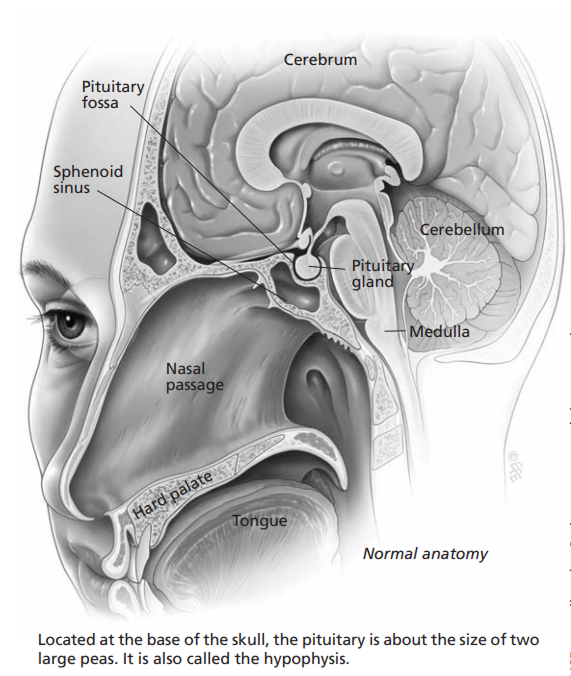
The pituitary is important because it produces hormones essential for the control of many of the body’s functions. If a tumour grows in the pituitary, these functions can become impaired. Pituitary tumours can be treated with medicines, surgery or radiotherapy. Most patients with a pituitary tumour that is causing symptoms will need to have surgery. The aim of pituitary surgery is to remove as much of the tumour as possible. Modern surgical techniques and instruments allow the neurosurgeon to reach the pituitary through the nose. An endoscope is passed into the nasal passage and sphenoid sinus. No skin incision is needed. The surgeon creates a hole in the front wall of the sphenoid sinus to access the pituitary. Using either the endoscope or an operating microscope, the surgeon opens the thin bone under the pituitary. Tumour tissue is removed using suction and special instruments. The surgeon tries to save as much pituitary tissue as possible, being careful to protect blood vessels and nerves.
Diagnosis
A decision whether to have surgery
As you make the decision whether to have surgery, make sure that you understand the risks, benefits and limitations of surgery. If you do not have surgery, your symptoms and condition may continue to worsen. Only you can decide if surgery is right for you. If you have any questions, ask your surgeon.