Neurosurgeon and Spine Surgeon
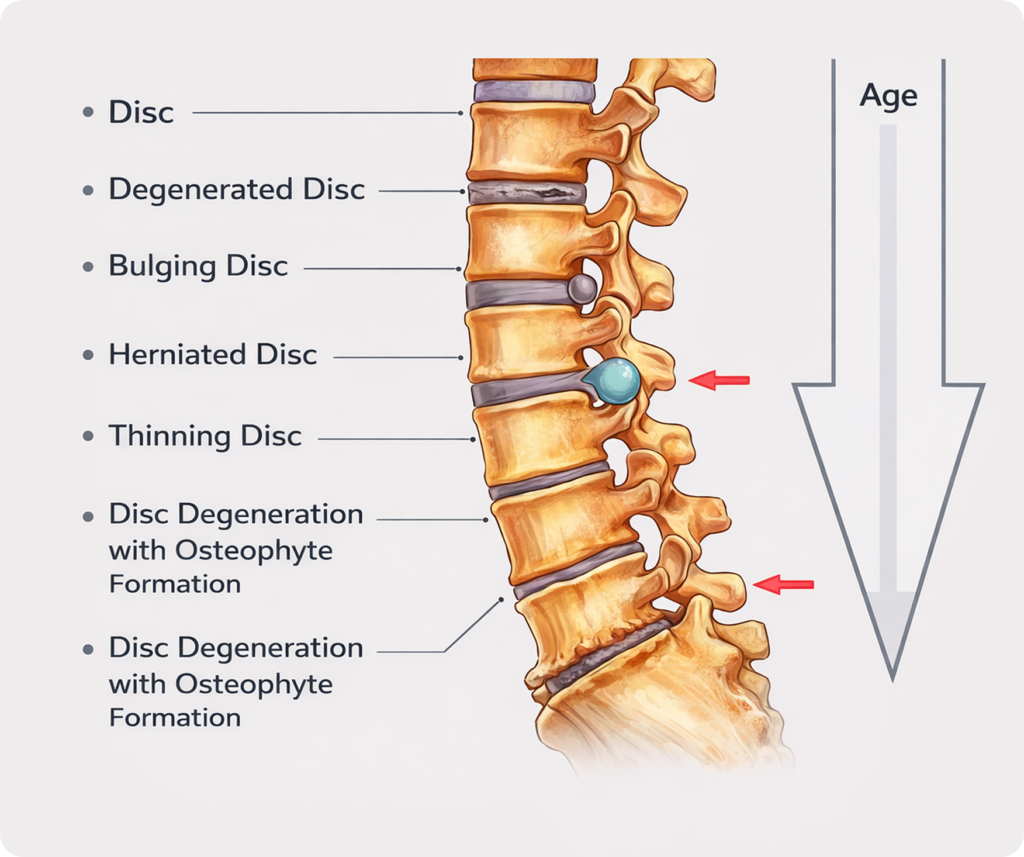
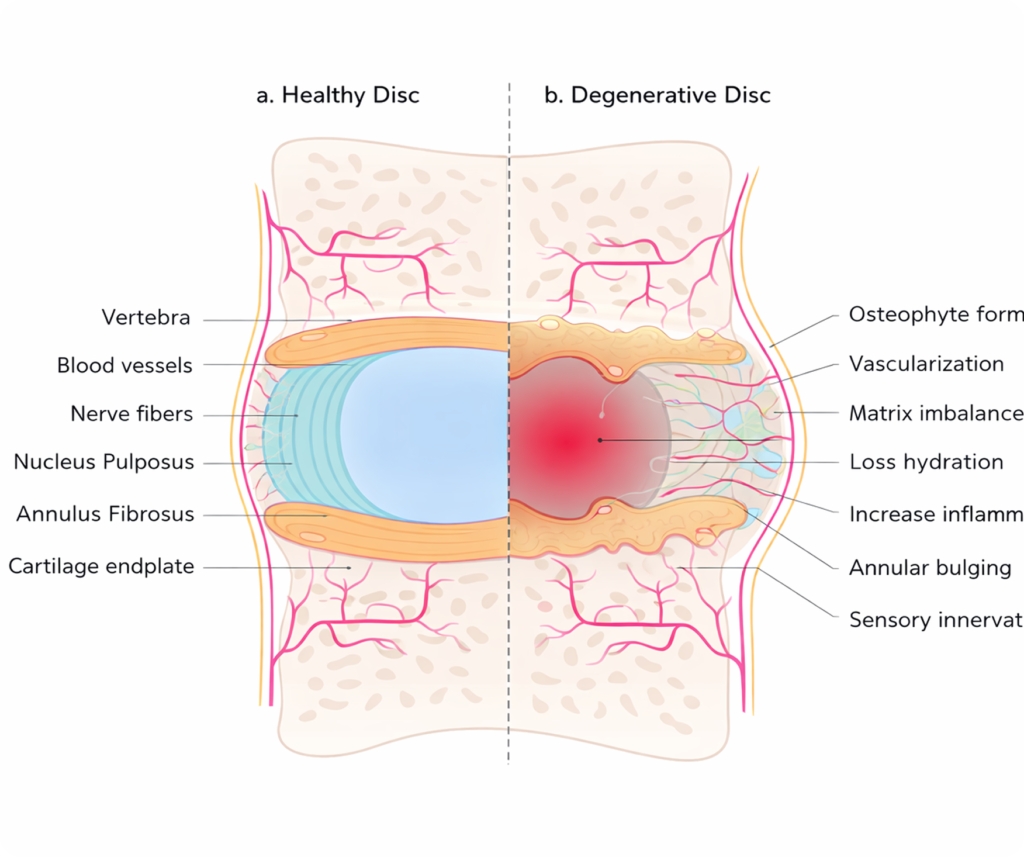
Discogenic pain arises from the sensation of increasing pressure within a disc and may start months or years before a disc protrusion. Pain is often experienced as pressure increases inside the disc until it ruptures and allows the internal pressure to reduce. Discogenic pain is typically exacerbated by long periods of standing or sitting in one position due to increased intra-discal pressure. Discogenic pain usually improves with movement or changes in position. Over years, the nucleus pulposus of the disc is gradually resorbed and the intra-discal pressure decreases. The degenerative process is therefore lifelong and gradual so treatment of symptomatic lumbar discogenic pain focuses symptom management rather than cure
dull central low back pain, worse when sitting, driving, stooping or standing for long periods. episodes of exacerbation can be severe but temporary if disc material extrudes, patients may report a “pop” in the back with subsequent improvement in back pain but onset of radicular symptoms

limited lumbar spine range of motion due to pain dermatomal pain, sensory loss or weakness if radiculopathy present in the worst case scenario, cauda equina syndrome may cause altered sacral sensation and lower limb weakness.
X-rays can be used to exclude serious pathology such as fracture, mal-alignment or spondylolisthesis CT can identify significant disc protrusion with nerve compression but not the internal disc anatomy such as annular tear or dessication MRI is the most useful investigation for disc pathology but is only indicated in patients with nerve compression due to the high cost and low yield for any pathology requiring intervention.
Our quality service to our patients and customers starts from your very first contact with our practice.
Copyright 2026 Capital Neurosurgery – All rights reserved.
Website designed and developed by Studio Who